Posted in Website

Bilingual brain: Here is what happens when you flip between languages

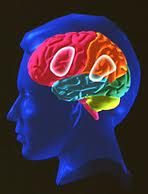
This article was written by Kashira Gander and posted on September 9th, 2018. A study published in the Proceedings of the National Academy of Sciences is described to explore the brain mechanisms that let bilinguals switch languages without effort. Graduate student Esti Blanco-Elorrietta says that switching languages means disengaging with one language and then engaging in another. That turning off the new language takes more effort than turning on a language. While the process looks easy, switching languages is a complicated process since it “involves the successful coordination of two independent language systems.” 21 volunteers where researched who where fluent in American Sign Language (ASL) where they would look at an image and saying its term in English and sign language at the same time while being filmed and their brain activity was measured. They saw that turning off a language needed cognitive control activity while the turning on the other language required almost no effort. Turning off is hardest when it is our dominant language causing a cognitive cost from stopping the language we are used to. Also, when speaking using the weaker language, we can add our dominant language is not hard at all. Thus we can “produce two languages for the price of one.” A limitation of the study was that it consisted of single word/ sign level not on the sentence or conversational level; however, this is progress in the field.


This is important to my guiding questions as it explains the cost on the brain when switching between two languages.

languages-stock
Image from the Article
Website Article Source:
Gander, K. (2018, September 10). Bilingual brain: Here's what happens when you flip between languages. Retrieved July 11, 2019, from Newsweek website: https://www.newsweek.com/ bilingual-brain-heres-what-happens-when-you-flip-between-languages-1111264  
Posted in Article

New Discoveries from the Bilingual Brain and Mind across the Life Span: Implications for Education

The research article “New Discoveries from the Bilingual Brain and Main across the Life Span” by Laura-Ann Petitto was published in 2009. The article discusses neuroscience research with the goal to see if there are sensitive periods in the human development of language and reading and to understand the development and functions of brain tissue. The new field of educational neuroscience has emerged that allows us to analyze educational problems. This study shows how language research in educational neuroscience can help with educational policy and practice. Multiple studies were performed in this article. The first finding was that introducing a new language did not “damage” or “contaminate” the language first taught at home. The second finding was that bilingual babies have an “increased sensitivity to a greater range of phonetic contrasts, and extended developmental window of sensitive for perceiving these phonetic contrasts relative to monolingual children” (5). Another finding include that bilinguals who learned two languages by the age of, process the languages very similar to monolingual individuals. Bilinguals who learned a second language later “exhibit more bilateral activation, recruits more distributed frontal lobe tissue (including working memory and inhibitory areas) and recently exhibit more cognitive effort” (7).


This source is very useful in determining how the bilingual brain is different from the monolingual brain. It also shares how factors such as the age of language acquisition factors into how the brain is developed. These are essential to my guiding questions regarding the development of the bilingual brain.

Article Source:
Petitto, L.-A. (2009). New Discoveries from the Bilingual Brain and Mind across the Life Span: Implications for Education. Mind, Brain, and Education, 3(4), 185–197. Retrieved from http://search.ebscohost.com/login.aspx?direct=true&db=eric&AN=EJ862467&site=eds-live
Posted in Video

How language shapes the way we think | Lera Boroditsky

Does language shape the way we think? Charlemagne, Holy emperor said “to have a second language is to have a second soul.” This means that our language creates our reality. Languages affect cognitive ability. For example, in an aboriginal community in Australia Kuuk Thaayorre in Pormpuraaw (on the west edge of Cape York), they talk in cardinal directions (not left or right) such as north, west, east, and south. Instead of saying hello, they say “which way are you going?” You respond with something like “north-north east in the far distance, how about you?” They can stay oriented very well because they are trained by their culture. Also, if they were to sort something in chronological order, they would place them from east to west (instead of left to right) in way it corresponds to their landscape.

There are languages that don’t have a number system thus not deep in mathematics. Also, Russians have different names for shades of blue while we have only the color blue. As such, Russians are faster to tell the difference between a darker and lighter blue. Their brains will show a “surprise reaction” as the color shifts from dark to light as a categorical change. Some languages have a gramatical gender. Like the sun has a feminine gender in German while a masculine one in Spanish. These genders do affect the way that language speakers perceive the world. For example, Germans described a bridge as “beautiful” and “elegant” due to its feminine gender, while Spanish speakers describe it as “long” and “strong” with its masculine gender. Languages are structured differently such as “he broke the vase” while in Spanish you say “they vase broke” since it was an accident. People of different languages pay attention to different things depending on what language requires us to do. In English we remember who did it while in Spanish we remember if it was an accident (intentions). We tend to blame more in English. The speaker states: “The beauty of linguistic diversity is that it reveals to us just how ingenious and how flexible the mind is. Human minds have invented not one cognitive universe, but 7,000 — 7,000 languages spoken around the world.” We can also create languages. We are losing one language a week, thus in 100 years we will lose half. She concludes that we reflect on how are we shaped to think and how do we want to think.


While this Youtube video does not discuss the bilingual brain specifically, it does discuss how language affects us. I include this in my studies to see the role that language has on us in determining our perceptions about the world, and how that is applicable to helping us see the role that two or more languages learned together can affect the way we see and respond to others and the world around us. This increase in perceptions is an advantage of having a bilingual or multilingual brain.

Video Source:
TED. (2018, May 2). How language shapes the way we think | Lera Boroditsky [Video file]. Retrieved from https://www.youtube.com/watch?v=RKK7wGAYP6k 
Posted in Website

Why Bilinguals Are Smarter

This New York Times Article “Why bilinguals are smarter” is written by Yudhuit Bhattacharjee on March 17, 2012. The article starts talking about how being bilingual is more than just talking to a diverse group of people, it also makes you smarter by improving cognitive skills and can slow down dementia in older adults. While there is proof that both language systems are active in the brain when using one language, it makes the brain learn how to resolve internal conflict which in turn makes its cognitive muscles stronger. Thus, bilinguals can solve mental puzzles better than monolinguals. In a study conducted in 2004, preschoolers where asked to sort blue circles in a bin with a blue square and red squares in a bin with a red circle. Both bilinguals and monolinguals conducted this fine as they associated the colors into its correct bin. After, the children where asked to sort by the images which conflicted with the color. Bilinguals were faster in completing this task.

Research has shown that the experience of being bilingual improves executive function which include problem solving, planning and mentally demanding tasks. These include: ignoring distractions, switching attention and holding information. Researchers used to believe that the bilingual advantage came from being able to suppress one language system and that that caused bilinguals to ignore distractions. However, studies show that bilinguals are also able to perform better in tasks that do not need inhibition (when compared to monolinguals). Also, the main difference between bilinguals to monolinguals is the “heightened ability to monitor the environment… it requires keeping track of changes around you in the same way that we monitor our surroundings when driving.” Not only do bilinguals perform better, but there is less activity in the brain in the parts that have to do with monitoring, which makes them more efficient. Being bilingual affects the brain from infancy to old age. In a study conducted in 2009, 7 month old babies where tested by being presented an audio cue and screen with a puppet appearing on one side. Both bilinguals and monolinguals anticipated the puppet. After many times of doing this, the puppet appeared on the other side of the screen. After that, bilingual babies quickly anticipated the puppet in the new location while others did not. Bilingualism not only affects children, but also elderly. 44 Spanish-English speakers were studied were more resistant to dementia and symptoms of Alzheimer’s desease. ” the higher the degree of bilingualism, the later the age of onset.”


This research is essential for my guiding questions it expresses the advantages of the bilingual brain compared to those who are monolingual. Bilinguals can not only speak to various people with their two languages, but can also perform better in problem solving . Also, bilingualism has been attributed help with prolonging dementia.

Picture on website
Website Source:
Bhattacharjee, Y. (2012, March 17). Why bilinguals are smarter. Retrieved June 25, 2019, from The New York Times website: https://www.nytimes.com/2012/03/18/opinion/sunday/the-benefits-of-bilingualism.html  
Posted in Website

Bilingual Brains – Smarter & Faster

The article “Bilingual brains – Smarter & Faster” is written by Judy Willis on November 22, 2012. The article describes bilingualism is a gift that parents can give their children because being bilingual has shown advantages when compared to those who know one language. These advantages include an elevated level of thinking/ awareness such as an increased attentive focus and cognition. For example, “compared to monolinguals, the studied bilingual children, who had had five to ten years of bilingual exposure, averaged higher scores in cognitive performance on tests and had greater attention focus, distraction resistance, decision-making, judgment and responsiveness to feedback.” Even in MRI scans, the prefrontal cortex networks of bilingual children demonstrated greater activity. These were specifically in the the brain networks called executive functions that are used for goal-oriented behavior. The brains of bilinguals are more complex since they need to figure out not only what a word means but what patterns of the sentence and grammar, and pronunciation that needs to be used for the language being spoken. For example: “these control networks make choices, such as which memory storage circuits are the language-correct ones to activate from which to select the correct word, syntax, and pronunciation. ”

Research has shown that parents who speak a different language than English should maintain the native language in the home even if there are social pressures to limit language learning. Parents feel that learning two languages will confuse the student in learning English and also making it difficult to transfer different schools. Also, children struggled to feel like they “fit in” due to having to translate for their parents and did not want their parents to sound “ignorant.” What these parents do not know is that learning two or more languages actually “strengthen their highest cognitive brain potentials.” Parents need to be informed about the research and keep the native language in the home. The brain is like a muscle that becomes stronger after we workout our body, that “build strength, speed, and efficiency in their executive function networks.” Now the research is done on how to expose children to bilingualism in early ages .


This is really important to for my research questions, as not only are the advantages of bilingualism being more commonly known, there is a visible growth in determining how to best achieve these advantages with our own children.

Images used in the website:

Website Source:
Willis, J., M.Ed. (2012, November 22). Bilingual brains - smarter & faster. Retrieved June 25, 2019, from Psychology Today website: https://www.psychologytoday.com/us/blog/radical-teaching/201211/bilingual-brains-smarter-faster  
Posted in Creative Work

“Stand By Me” by Prince Royce

The song featured in the YouTube video “Prince Royce – Stand By Me (Music Video)” is one that uses both English and Spanish lyrics. This song is about the singer asking his “darling” to stand by him. That while the mountains or sky falls, he will not worry because he knows she will be there. He says that next to her, he won’t cry because he knows she will stand by his side.

Song Lyrics:

When the night, has come and the land is dark
Y la luna es la luz que brilla ante mi;
Miedo no, no tendre;, oh I won’t, no me asustare
Just as long as you stand, stand by me

And darling, darling stand by me oh stand by me
Oh stand, junto a mi, junto a mi;

Y aunque las montanas o el cielo caiga
No voy a preocuparme porque se
Que tu estas, junto a mi
No llorare , no llorare oh, I won’t shed a tear
Porque se, que tu estas junto a mi

Oh stand, stand by me, stand by me

That’s class right there
And darling, darling stand by me oh stand by me
Oh stand, junto a mi;, junto a mi;
And darling, darling stand by me oh stand by me
Oh stand, junto a mi;, junto a mi;

Come on,swag,too strong,whats my name,Royce
And darling, darling stand by me oh stand by me
Oh stand, junto a mi;, junto a mi


I have chosen this song because it is sang in Both English and Spanish. The languages work together peacefully and fluidly. They seem to both be one language and they convey similar messages. In this example of a song, I feel that language was used and intertwined beautifully. This helps me answer my guiding questions as I can see that language is not really divided as previous studies had thought, that they work together with similar mental connections.

Video Source
Top Stop Music. (2010, January 25). Prince Royce - Stand By Me (music video) [Video file]. Retrieved from https://www.youtube.com/watch?v=foyH-TEs9D0  
Lyric Source
Stand By Me (spanglish version) Prince Royce. (2019). Retrieved June 27, 2019, from Genius website: https://genius.com/Prince-royce-stand-by-me-spanglish-version-lyrics  Lyric Source
Posted in Website

Understanding the Bilingual Brain

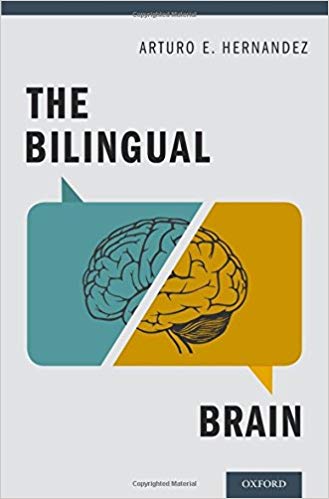
The website article “Understanding the bilingual brain” is published on Psychology Today by Francios Grasjean Ph.D on September 19, 2014. This article describes the neural bases of bilingualism. First Aurturo Hernandez is introduced who is professor at the University of Houston who ” works on the underpinnings of bilingual language processing as well as second language acquisition in children and adults.” He grew up as a bilingual who spoke English and Spanish, as well as two other languages he learned later in his life. in 2013, he published a book called The bilingual Brain and answers some questions regarding his work. He asked about the latest and most interesting findings in the field and he says that “that the differences in language experience can lead to clear neuroanatomical differences.” He also describes how two languages can co-exist together peacefully and share resources; however, they compete. Meaning that knowing one language can help another language yet can mean different things too. For example, he describes his Spanish speaking friend who accidentally frightens a waitress to be careful “because he was vicious.” In Spanish, this would be that he is addictive while in English it means that he has vices. While the word is similar it can be confusing when they in fact are different. Then he tells us how stress can lead to a loss of one language but not of another. This happens due to memory being set up to remember what we need thus “languages are set to be remembered when we need them.” Also, the language that is less affected by stress is the dominant language since it has “stronger interconnections with our knowledge.” Also, the two factors that cause one language to be privileged in the bilingual brain include the proficiency of the language and the age the language was acquired.

He then goes on to discuss language mixing. A metaphor tells of a “language switch” where areas in the “prefrontal cortex, the parietal lobe and/or the basal ganglia are involved.” The issue is that usually it is very easy to switch languages which the author believes is due to external cues that trigger each language and how the brain can quickly adapt to these different cues with the appropriate response. Also, the field of cognitive neuroscience has moved away from thinking where languages are stored in the brain to how the brain, mind and human body interact (a more systems-oriented approach). In the past, mind sciences was based on the thought that the mind was like a computer. The author believes that humans are more than that, “our brains are connected to the body and as such we function as an organism.” Lastly, he thinks that we must start answering questions stated in the late 19th century such as : “How do age of acquisition, language proficiency and language control help to shape the bilingual brain ?” He wants to move away from “thinking about areas of the brain, we could start to think about cognition as a series of brain states that come and go like waves near the shore. “


This article is useful for my guiding questions as it describes how two languages interact and how and why one can be privileged than the other. This shows current research, which moves away from old approaches to understanding of the bilingual brain as a computer to one that focuses on factors that shape and interact with the bilingual brain.

Article Source:
Grosjean, F., Ph.D. (2014, September 19). Understanding the bilingual brain. Retrieved June 27,  2019, from Psychology Today website: https://www.psychologytoday.com/us/blog/life-bilingual/201409/understanding-the-bilingual-brain  
Book Mentioned in Article:
Hernandez, Arturo E. (2013). The Bilingual Brain. New York: Oxford University Press. 
Posted in Video

Language On The Brain Podcast Episode 1: Bilingualism

The YouTube video called “Language On The Brain Podcast Episode 1: Bilingualism” is part of the Language on the Brain Podcast that from The Interesting Channel published on May 14, 2014. According to the speaker, she speaks of a balanced bilingual who learns two languages at a young age together and the dominate bilingual who learned one language first and took on a second one later in life. She states that those with “high proficiency in one or more languages would induce more focal activity in core regions of the language network in the brain whereas a lower proficiency would be accompanied by a wider distribution of activity in less core areas. ” She then speaks more of how defining bilingual is confusing since some consider it to mean having knowledge of how to speak a language versus being completely fluent in the language. She then says that it is unclear as to what it means to be fluent or the uncertainty as to what constitute as a language. She also discusses how there is debate as to whether bilingual education is good for children and how in the 1960s that bilingual education “would be detrimental to a child’s education, that they wouldn’t develop a full knowledge of either language.” She claims that there are actual cognitive advantages of multilingualism and bilingualism. For example, “it has actually been proving that the onset of various types of dementia happens later in multilingual… you keep your brain active, you use more of your brain areas.” Also, “being bilingual gives you a sense of metalinguistics, so you literally think about what you are saying,” which helps you think more deeply and make better decisions. She promotes the fact that you have exposure to foreign films and music.


This source is useful to my guiding questions as it demonstrates some basics of bilingual language, metacognition, and the brain.

Video/ Podcast Source:
Cat (Producer). (2014, May 14). Bilingualism [Show #1]. Language On The Brain. Podcast retrieved  from https://www.youtube.com/watch?v=LgmQh8SWh2A